

Stress Is Killing Officers
A UNC-Chapel Hill researcher has launched the Carolina Blue Project, a study examining how job stress drives unhealthy eating and elevated heart disease risk among law enforcement officers, according to UNC Research. Data from the project — which has enrolled more than 600 officers across 56 North Carolina counties — shows that U.S. police officers have the highest risk of developing and dying from heart disease of any occupation, with 10% of all on-duty fatalities attributable to sudden cardiac death. Initial findings from the first phase revealed that roughly 60% of participating officers were obese and nearly one in five had high blood pressure, with officers reporting higher levels of anti-police sentiment, PTSD, and fear of victimization significantly more likely to engage in binge and loss-of-control eating. ❤️🩹 More here
Austin Mass Shooting
A mass shooting in downtown Austin’s popular West Sixth Street bar district left three dead and 14 injured in the early morning hours Sunday, with the FBI investigating the incident as a potential act of terrorism, according to Axios Austin. The suspect, identified as 53-year-old Ndiaga Diagne, a naturalized U.S. citizen originally from Senegal, was shot and killed by officers after driving around the block multiple times before opening fire on patrons at Buford’s Bar with a pistol, then exiting his vehicle and firing a rifle at pedestrians. Investigators found “indicators” on the suspect and in his vehicle suggesting a potential nexus to terrorism; he was wearing a sweatshirt reading “Property of Allah” and a shirt bearing an Iranian flag design. Three of the 14 hospitalized victims remain in critical condition, and the FBI said it is too early to determine an exact motive. 🔗 More here
Iran Threat: Homeland on Alert
Following U.S. and Israeli strikes that killed Iranian Supreme Leader Ayatollah Ali Khamenei, the FBI and Department of Homeland Security have moved to a heightened counterterrorism posture, warning of potential retaliatory attacks on U.S. soil, according to USA Today. FBI Director Kash Patel has directed the bureau’s 200-plus Joint Terrorism Task Forces nationwide to mobilize around the clock, while DHS Secretary Kristi Noem said her department is closely monitoring potential domestic threats. Experts note that Iran has a 46-year history of carrying out or plotting attacks on U.S. soil, and that U.S. authorities have disrupted at least 17 Iranian plots domestically since the 2020 killing of General Qassem Soleimani — including assassination plots against President Trump and former National Security Adviser John Bolton. Iranian President Masoud Pezeshkian has publicly vowed retaliation, and three American service members have already been killed in the ongoing conflict overseas. Federal officials are also warning of potential Iranian-backed cyberattacks against U.S. networks. 🔗 More here
AI Chatbots Duty to Warn
A growing debate over whether AI chatbot companies have a duty to warn law enforcement when users discuss plans for violence has gained urgency following two high-profile cases, according to the New York Times. In January 2025, Matthew Livelsberger used ChatGPT to research explosive materials before detonating a bomb-laden Cybertruck outside a Las Vegas hotel; OpenAI only provided chat logs to investigators after the attack. More troublingly, OpenAI’s internal monitoring system flagged a Canadian user, Jesse Van Rootselaar, in June 2025 for discussing gun violence, but the company determined there was no imminent credible threat and banned the account without notifying police — Van Rootselaar went on to kill eight people, including children, in British Columbia this month. The cases have sparked debate among legal experts, former law enforcement, and tech industry insiders over whether chatbot companies bear an ethical or legal obligation to report suspicious activity, with some calling for mandatory suspicious-activity reporting similar to requirements placed on banks, while others warn such mandates could overwhelm law enforcement and raise constitutional concerns. 🔗 More here
Trooper Killed by Repeat DWI Driver
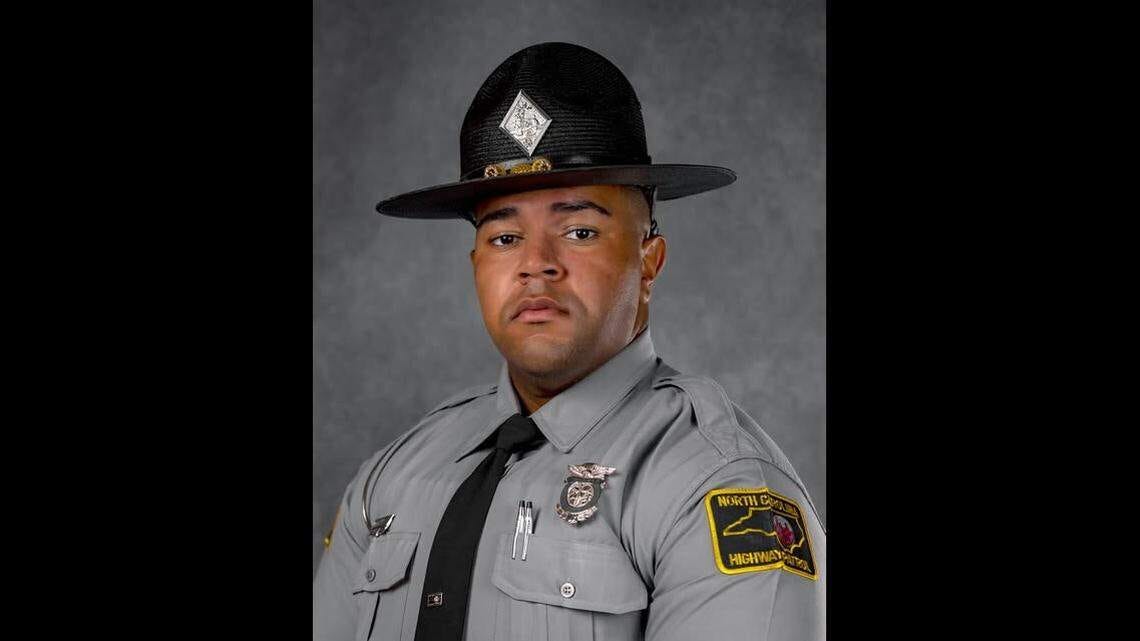
A North Carolina State Highway Patrol trooper was killed early Sunday morning when a wrong-way driver struck his patrol vehicle head-on, according to the News & Observer. Master Trooper Steven J. Perry, 30, a six-year veteran, died at the scene along with the other driver, 39-year-old Melshawn Moore, who investigators suspect was impaired at the time of the crash. Court records show Moore had been convicted of driving while impaired at least three times in North Carolina, and traffic citations ranging from reckless driving to open container violations had been dismissed in at least six separate cases dating back to 2010. 💙🖤 More here
Deputy Killed During Traffic Stop
A Bernalillo County (NM) Sheriff’s Office sergeant was killed in the line of duty Monday evening when a semi-truck struck the rear of his patrol vehicle while he was conducting a traffic stop, pinning him underneath and killing him at the scene, according to KOAT Action 7 News. Sergeant Michael Schlattman, a 14-year veteran of the department who had been promoted to sergeant in 2024, had served in special investigations, auto theft, and as a task force officer with both the U.S. Marshals Service and the DEA prior to his death. 💙🖤 More here
World Cup Security in Jeopardy
With just over 100 days until the FIFA World Cup kicks off, local officials from U.S. host cities warned Congress that frozen federal funding, inadequate coordination, and emerging threats — including drones, human trafficking, and cartel violence near Mexican host cities — are putting security planning at serious risk, according to ESPN. The federal government had earmarked $625 million for security across 11 host cities, but an 11-day freeze on Homeland Security funding has halted disbursement; Miami officials warned that without roughly $70 million in federal funds, late March marks a “drop dead date” for canceling Fan Fest events, while Kansas City officials said they lack sufficient staffing to cover all security threats. The National Fusion Center Association president testified that coordination between local agencies and the federal government remains far short of what is needed at this stage of planning. ⚽️ More here
Pod: From Dispatcher to Chief
Chief Stephen Redfearn of the Boulder Police Department joins the podcast to reflect on a remarkable law enforcement career that began as a teenage dispatcher. He shares firsthand insights from responding to landmark tragedies such as Columbine, the Aurora theater shooting, and more recent acts of mass violence, including the Pearl Street terror attack in Boulder. He talks about how those experiences have shaped him, the impact on officer wellness, and the importance of community trust. The conversation also explores Boulder’s innovative use of technology and AI—from AI report writing to drones and the use of transparency dashboards—and why, even in an era of rapid technological change, policing remains a deeply human profession.
Cartel Drones Become Flashpoint
The growing use of drones by Mexican cartels has become a flashpoint in U.S.-Mexico relations, brought into focus by the temporary closure of El Paso’s airport last week, according to Reuters. U.S. Transportation Secretary Sean Duffy attributed the closure to a cartel drone incursion, but government and airline officials later said the FAA shut the airspace due to risks from a U.S. Army counter-drone system being tested nearby. The Pentagon reports more than 1,000 drone incursions along the border each month, with cartels primarily using commercial drones to drop drugs and surveil border agents; experts note there has never been a confirmed cartel drone attack on U.S. soil. The episode comes amid repeated statements by President Trump about potential unilateral military action against cartels, with a DHS official previously warning Congress it is “only a matter of time” before law enforcement is targeted. 🔗 More here
Regarding the UNC Research, I believe it’s important to discuss the source of police stress. After completing my doctoral dissertation on police burnout, I can tell you that organizational stress (internal to the four walls of the department) is greater than or equal to operational stress (external). Moreover, poor leadership is a primary driver of stress. Why does it matter? Because we can control organizational stressors. In other words, we can be proactive to fixing the job rather than reactive to fixing the person.