

Crime Data vs. Perceptions
While FBI statistics confirm violent crime in the U.S. is far below 1990s levels, most Americans continue to believe crime is rising, USA Today reports. Surveys show fears are fueled by viral coverage of rare but shocking incidents, partisan divides—90% of Republicans versus 29% of Democrats said crime increased in 2024—and skepticism over incomplete reporting by local agencies. Although disputes remain, national data from the FBI and Bureau of Justice Statistics both show broad declines in crime, underscoring a persistent gap between perception and reality. 📊 More here
Chief Retains Command
D.C. Police Chief Pamela Smith remains in command after the Trump administration backed away from an order giving DEA Administrator Terry Cole full authority over the department, The Washington Post reports. City officials sued to block the move, calling it unlawful and dangerous to MPD’s command structure, while a federal judge brokered a compromise keeping Smith in place. The revised order allows Cole to direct the mayor to assign police for federal priorities, including immigration enforcement and clearing encampments, setting up further court battles. Meanwhile, federal and local officers have carried out a large-scale crackdown across the city, making nearly 190 arrests, more than a third tied to immigration enforcement. 🚔More here
New Briefing Room: Watch 📺 Like 👍 Subscribe 🙏
Hacked Police Emails for Sale
Cybercriminals are selling access to active law enforcement and government email accounts for as little as $40 on the dark web, according to research by Abnormal AI and reported in Infosecurity Magazine. Compromised accounts include U.S. agencies such as the FBI as well as counterparts in the U.K., India, Brazil, and Germany. Criminals advertise uses such as submitting fraudulent subpoenas, issuing fake emergency data requests, and bypassing verification systems. Access is typically obtained through phishing, malware, or credential stuffing, and is sold with full login credentials via encrypted platforms like Telegram and Signal. 🧑🏻💻 More here
Police to Disclose Suspect Ethnicity
Police in the United Kingdom will begin releasing a suspect’s ethnicity and nationality in certain high-profile cases to counter disinformation, The Washington Post reports. The new guidance follows riots last year after false claims that a Southport stabbing suspect was a Muslim asylum seeker; he was later identified as a White British citizen. Officials argue that greater transparency can prevent unrest and misinformation, while critics warn the policy risks stigmatizing minority groups and framing crimes through an ethnic lens. 🔗 More here
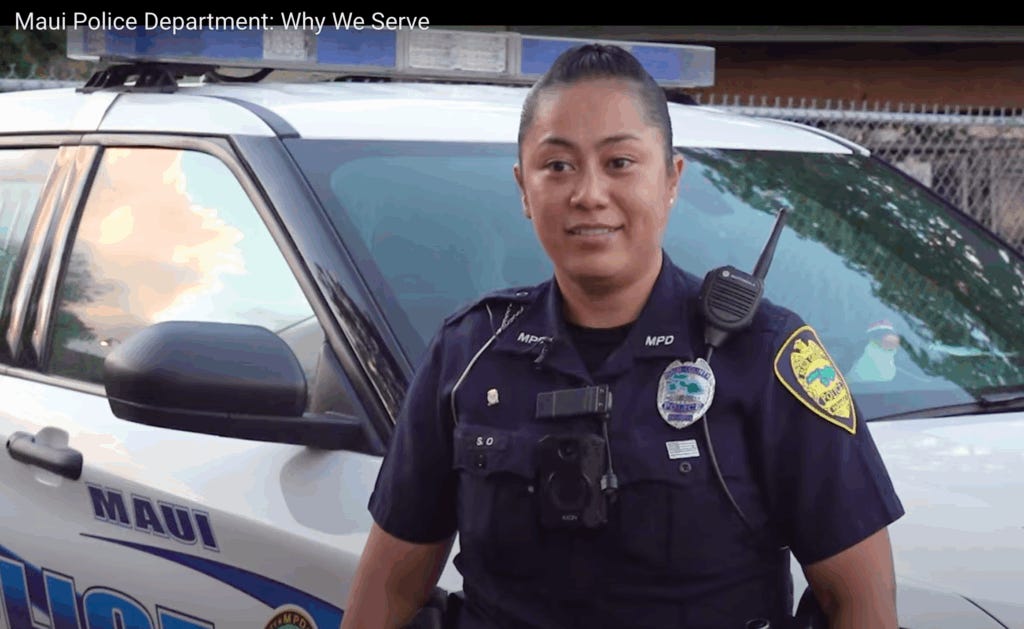
Maui Officer Killed in Line of Duty
Maui Police Officer Suzanne O was shot and killed Friday night while responding to a man firing a rifle in Pāʻia, Honolulu Civil Beat reports. Originally from American Samoa, O joined the department in 2020 and had spoken about wanting to inspire other Pacific Island girls by showing them there were more career options than the military. She was the first Maui officer killed by gunfire in nearly 70 years and only the second female officer fatally shot in Hawaiʻi in modern history. Colleagues described her as compassionate, genuine, and deeply dedicated, and she had been recognized for her service during the 2023 Maui wildfires. The suspect was wounded and taken into custody; his identity has not yet been released. 💙🖤 More here
Expanding Facial Recognition
The British government will roll out 10 new live facial recognition vans across seven police forces to identify suspects wanted for serious crimes, BBC News reports. The vans, already used in London, South Wales, and Essex, have contributed to 580 arrests in the past year, including 52 registered sex offenders. Each van is staffed by trained officers who verify algorithm matches, which independent testing found accurate with no bias by ethnicity, age, or gender. Civil liberties groups warn the expansion is intrusive and argue it lacks a clear legal framework, while the Home Office has opened a consultation on safeguards. 🎥 More here
Inside Fentanyl Smuggling
The Sinaloa Cartel continues to move fentanyl into the United States despite simultaneous crackdowns by Washington and Mexico, The New York Times reports. Operatives described concealing packages in car doors, gas tanks, and rocker panels, masking odors with chemicals, and relying on lookouts, bribes, and corrupted officials on both sides of the border. Under pressure, the cartel has shifted to smaller loads, forged an alliance with rivals, and redirected some shipments to Europe. Even weakened by infighting and higher costs, the cartel has adapted—showing the resilience of an entrenched trafficking network. ☠️ More here
Officers Dives In for Career Criminal
Drone Flights Surge Along Border
Cartels flew 60,000 drones along the U.S.-Mexico border in the last half of 2024, averaging 328 flights per day within 500 meters of U.S. territory. Federal officials told the Senate Judiciary Committee the drones are used for surveillance of U.S. Border Patrol, guiding migrant movements, and dropping narcotics. DHS counter-drone director Steven Willoughby warned that cartels have already used drones with explosives in Mexico—killing soldiers in recent attacks—and it may be “only a matter of time” before U.S. officers or civilians are targeted. Lawmakers from both parties voiced concern about the threat to law enforcement and to large public gatherings, including the 2028 Olympics. 🚁 More here
“Gentle Giant” Killed
South Carolina Highway Patrol Trooper Dennis Ricks died after being struck by a box truck while conducting a traffic stop on I-26 near Orangeburg, WCBD News 2 reports. Ricks, who joined the patrol in 2023, was remembered by his wife Jade as a “gentle giant” who loved his family and served with quiet bravery. He was transported to a hospital but later succumbed to his injuries; the driver, 45-year-old Anthony Aydlette, faces charges in connection with the incident. Law enforcement from across the state escorted his body and paid tribute, with officials calling his death yet another reminder of the dangers officers face during roadside encounters. 💙🖤 More here
ASEBP 2026 Annual Conference
The American Society of Evidence-Based Policing is accepting proposals for its 10th Annual Conference, to be held May 20–22, 2026, at American University in Washington, D.C. Submissions for thematic panels, individual papers, lightning talks, and posters are open from August 1 through September 30, 2025. Abstracts should address how research informs policing practice. 👩🏻💻 More here
🚔 More police news @ Police Briefing
🎧 Boldly Go Podcast, here