

IACP Urges National Dialogue
The International Association of Chiefs of Police (IACP) has issued a formal call for the White House to exercise its convening authority to address growing strains on the national public safety system. Expressing concern over “heightened tension” and deepening divisions, the IACP emphasized that effective policing requires measured rhetoric from officials to reinforce public trust and the rule of law. The association reaffirmed its commitment to constitutional protections against unreasonable searches while underscoring that officer safety is a fundamental priority inseparable from community safety. To identify a “constructive path forward,” the IACP advocates for high-level policy discussions between federal, state, and local law enforcement leaders grounded in proven practices and accountability. 🔗 More here
MN Chief Speaks Out
Planning for Peace
A new report from the RAND Corporation outlines practical guidance for promoting peaceful protests by emphasizing preparation before events, proportional and patient responses during demonstrations, and structured reflection afterward, according to RAND. Published January 22, 2026, the research highlights the importance of continuous communication, collaborative planning between law enforcement and community stakeholders, tactical patience and de-escalation during protests, and post-event reviews such as after-action reports and community debriefs to reduce tension, improve safety, and strengthen long-term trust. 🔗 Report here
Historic Crime Decline
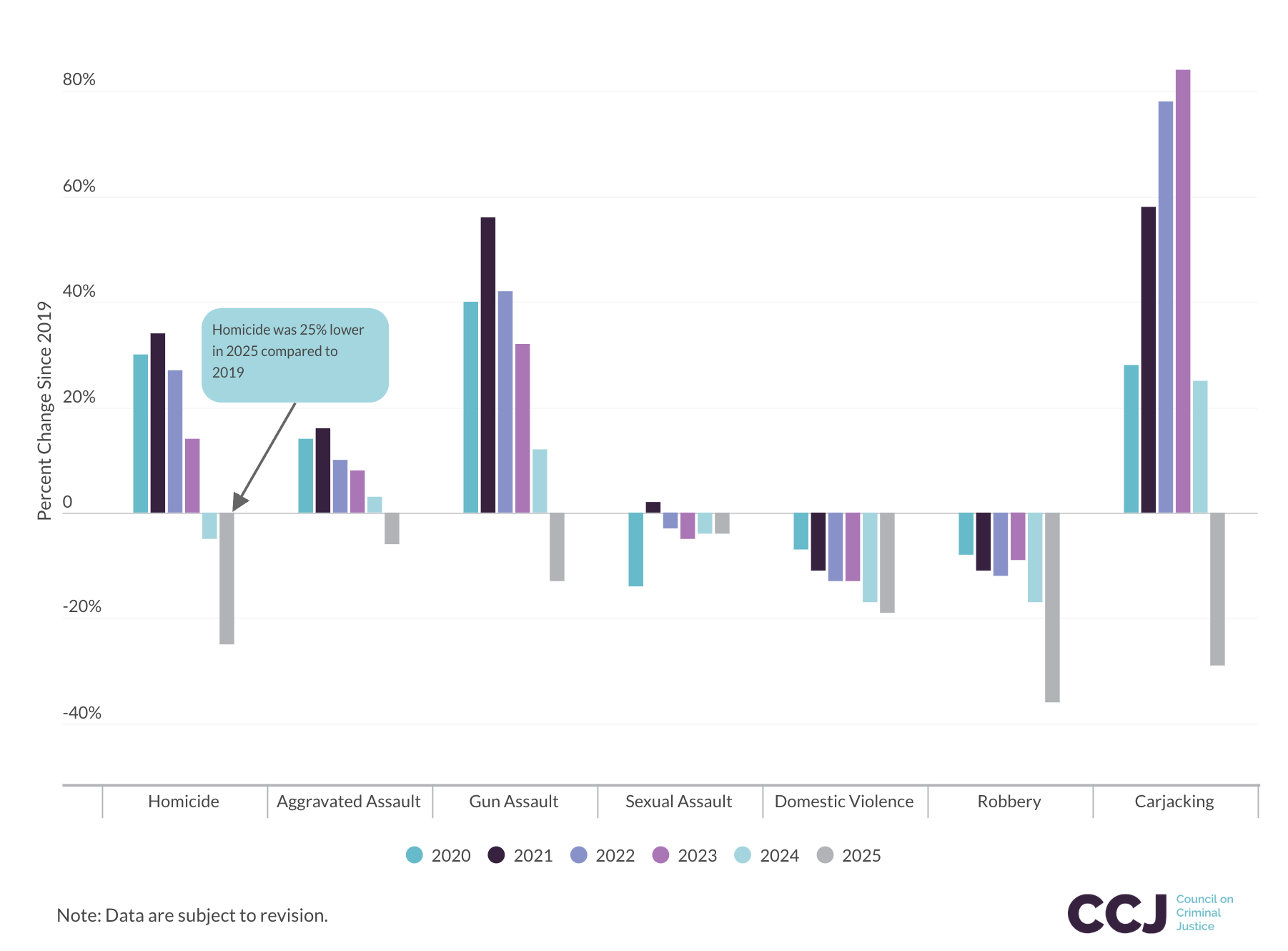
A comprehensive year-end analysis by the Council on Criminal Justice of 40 large American cities reveals that 11 of 13 major offense categories decreased in 2025, with nine offenses seeing double-digit percentage declines. The most significant finding is a projected 21% drop in the national homicide rate, which researchers estimate could reach approximately 4.0 per 100,000 residents—the lowest rate ever recorded in law enforcement data dating back to 1900. Violent crime has largely returned to or fallen below 2019 levels, with dramatic reductions in gun assaults (-22%), carjackings (-43%), and robberies (-23%) over the last year. Property crime also saw a major reversal as motor vehicle thefts plummeted by 27% in 2025, following years of consistent increases. Drug offenses were the only category to rise, increasing by 7%. 📊 CCJ report here
Precision Over Saturation
Metro Nashville Police Chief John Drake says Nashville’s falling crime rates stem from more targeted, “precision” policing rather than broad hotspot strategies, according to The Nashville Banner. In a wide-ranging interview marking his fifth year as chief, Drake pointed to focused units addressing motor vehicle theft, robberies, and non-lethal shootings, along with community advisory groups and victim-centered approaches, as key drivers behind declines in homicides, robberies, burglaries, and sexual assaults. He argued that wider adoption of technology—especially license plate readers and integrated video—could further reduce crime and offset staffing shortages, while maintaining that MNPD does not engage in immigration enforcement beyond addressing criminal activity. 📉 More here
AI Meets Cold Cases
Police departments are increasingly using artificial intelligence to accelerate detective work by searching vast stores of digital evidence, helping advance cold cases, missing-person investigations, and trial preparation, according to Axios. Agencies in Alaska, Washington, and Pennsylvania are using AI tools from startups like Closure and Longeye to analyze jail calls, interviews, photos, and case files in minutes rather than weeks, easing investigative backlogs caused by data overload. While police leaders say the technology surfaces leads for human review rather than automating decisions, civil liberties groups warn the growing use of AI in core criminal justice processes raises concerns about transparency, bias, and accountability. More here
Waymo Under Scrutiny

U.S. safety regulators have opened a new investigation into Waymo after its driverless taxis repeatedly passed stopped school buses in Austin, Texas, raising concerns about student safety, according to Reuters. The probe follows at least 19 reported incidents since the school year began and comes after Waymo recalled more than 3,000 vehicles to update software tied to the violations, even as the company maintains its autonomous system is improving and has not caused any collisions.
A British FBI
The U.K. government plans to create a new National Police Service—informally dubbed the “British FBI”—to centralize complex investigations such as counterterrorism, fraud, online child abuse, and organized crime, according to ABC News. The new force would consolidate existing national and regional units, including counterterrorism functions and organized crime teams, with the aim of relieving pressure on the 43 local police forces in England and Wales so they can focus on day-to-day policing. Home Secretary Shabana Mahmood said the current system is outdated, and that a single national force could improve expertise, attract specialized talent, and reduce costs through centralized procurement, with full proposals expected to be presented to Parliament this week. 🇬🇧 More here
FirstNet Competition Fight
Two major law enforcement groups are urging Congress to allow more competition for public safety network funding as FirstNet’s 2027 reauthorization approaches, according to Broadband Breakfast. The National Sheriffs’ Association and the Major Cities Chiefs Association argue that current rules favor AT&T, which operates FirstNet, and no longer reflect today’s public safety communications landscape, citing reliability concerns and the growth of alternatives from Verizon and T-Mobile. The debate comes ahead of a Senate hearing on the future of the FirstNet Authority and amid ongoing litigation involving spectrum access at the Federal Communications Commission. ☎️ More here
New Pod This Week
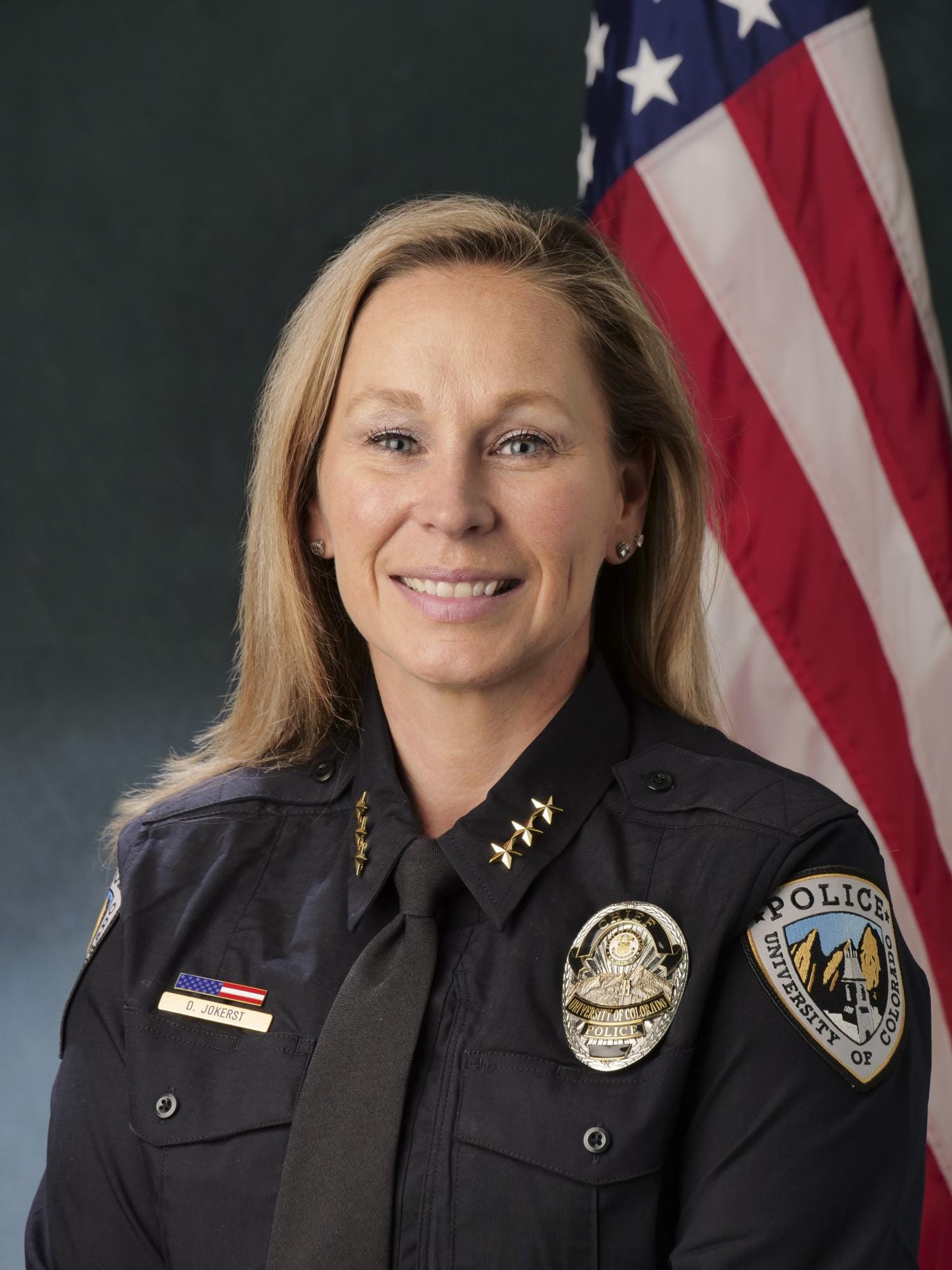
In this episode dropping this week, I sit down with Overland Park (KS) Police Chief Doreen Jokerst about police leadership, community trust, and the future of public safety. Chief Jokerst shares her guiding principle of “protecting the vulnerable from harm,” reflects on her path from the University of Colorado to leading one of Kansas’s largest departments, and discusses lessons from major events, mentorship, organizational culture, and the responsible use of technology and AI in policing.
It's interesting how the call for measured responses, much like finding balance in Pilates, truely emphasizes that patience and precise execution build enduring trust.