

ALPR Support Flips
Public opinion on automated license plate readers has shifted sharply in just one year. The Washington Post reports a YouGov survey of roughly 20,000 adults found 46% now oppose ALPR use in their communities and 38% support it, reversing last year’s 45% support and 33% opposition. A separate survey found 43% said the technology would make them feel neither safer nor less safe, while 27% said safer; 38% did not believe the cameras reduced nearby crime, compared with 30% who did. At the same time, majorities still support police using ALPRs to recover stolen vehicles, locate missing people and investigate violent crime. The polling also found broad bipartisan support for requiring police to obtain a warrant before accessing license-plate data, with about three-quarters of Democrats and roughly six in 10 Republicans and independents supporting such a requirement. 📉 More here
Law Enforcement Defends ALPR
Ten national law enforcement organizations—including the Major Cities Chiefs Association and Major County Sheriffs of America—issued a joint statement supporting the continued responsible use of automated license plate readers while acknowledging concerns about privacy, misuse and accountability. The groups emphasized that ALPR provides investigators with time-sensitive leads to locate missing and endangered children, trafficking and kidnapping victims, violent offenders and fugitives, recover stolen vehicles, and connect serious criminal activity across jurisdictions. They stressed that ALPR does not identify people, establish guilt or replace investigators, and that information must be verified before enforcement action. The organizations called for strong access controls, auditing, retention and sharing policies, training and supervisory oversight—and consequences when the technology is misused—while preserving the ability of agencies to appropriately share information across jurisdictions. 📄 More here
Policing and the Crime Drop
America’s historic crime decline is increasingly difficult to dismiss—and effective policing is part of the explanation. The Marshall Project reports that FBI data showed every major violent-crime category falling last year, producing the largest year-over-year decline in violent crime rates since federal estimates began. Among the explanations cited by experts is the growing use of evidence-based policing, which directs officers and resources toward the places and offenses driving the most serious violence. Baltimore combined enhanced police investigations and focused deterrence with victim services and community intervention, with shootings and homicides falling by one-third in districts using the strategy. Lower violence can also strengthen police effectiveness: fewer homicides mean detectives carry smaller caseloads, giving them more time to solve cases, make arrests and potentially prevent retaliatory killings. The causes are complex, but the evidence suggests that targeted, data-driven policing belongs prominently in the conversation about why crime is falling. Other explanations cited include the continued normalization after the pandemic-era crime spike, increased government investment and community violence-intervention programs. 📊 More here
South Carolina Officer Killed
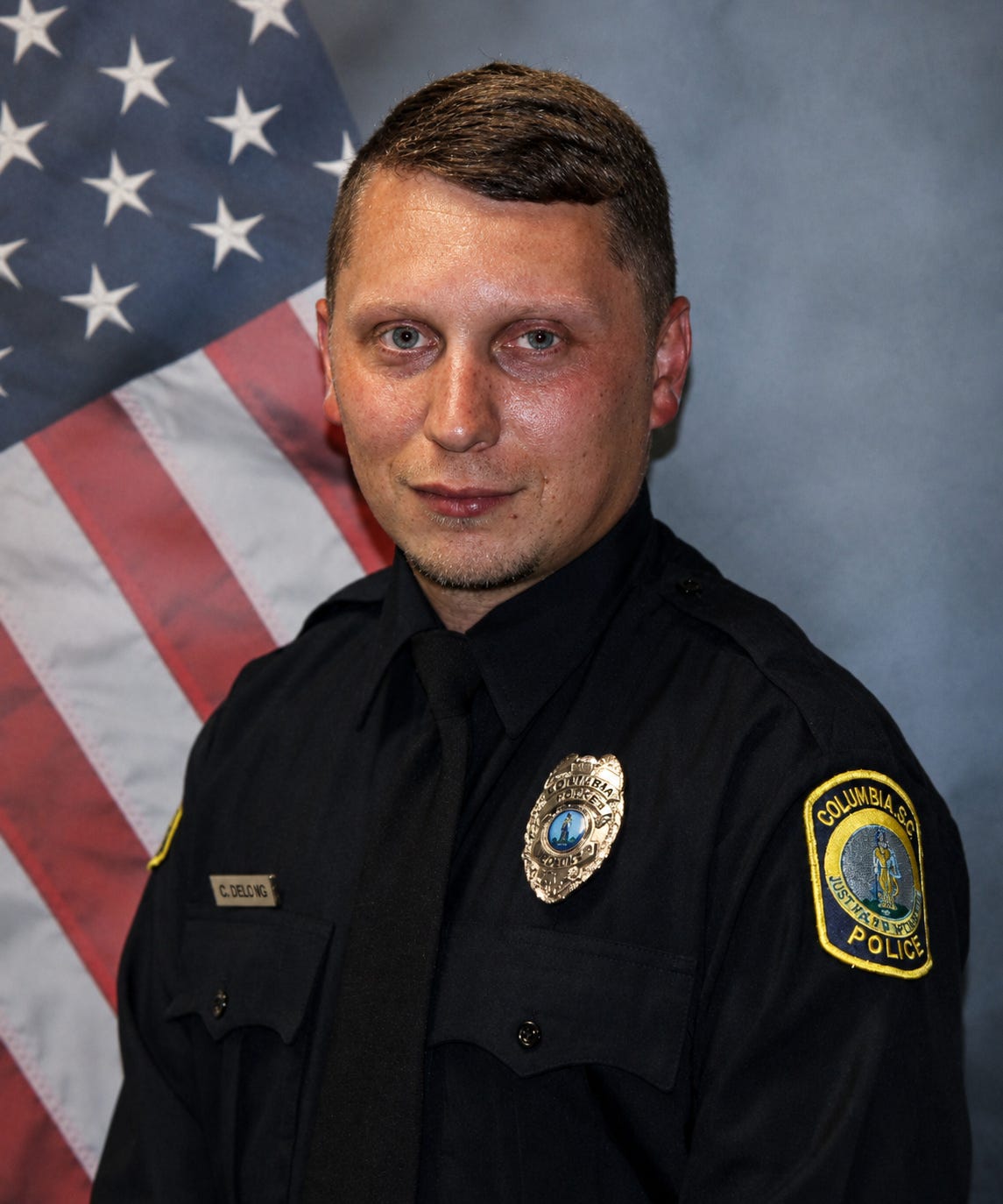
Columbia, South Carolina, Police Officer Christopher DeLong, 29, was killed and Officer David Dymock was wounded Saturday after responding to a domestic dispute involving a man who was the subject of a restraining order. The Associated Press reports DeLong located a man near a vehicle matching the description provided by the caller and Dymock arrived as backup before officers reported they had been shot and the suspect was down. The suspect, identified as 33-year-old Adam Tyler Dowdy, also died and had a history of arrests across at least four states. DeLong had served with the Columbia Police Department for two years and leaves behind a wife and two young children. Dymock was reported in stable condition. “Our hearts are broken,” Chief Skip Holbrook said. 🖤 💙 More here
Seattle Searches Again
Seattle is launching another search for a police chief, with Mayor Katie Wilson saying she wants a leader who is “visible, accountable, and present” and can earn public trust while supporting officers and delivering public-safety results. KING 5 reports the search follows the July departure of Chief Shon Barnes after criticism surrounding the department’s response to a mass shooting at Bite of Seattle that killed three people and injured seven. The city will use an advisory committee of law enforcement leaders and community members and gather public input through neighborhood meetings and surveys, with a new chief expected to be selected by early 2027. 🚨 More here
Choosing the Next Chief
Minneapolis is beginning the search for its next police chief, with the city turning first to residents for input on what they want from the department’s new leader. CBS News Minnesota reports the city will hold its first community listening session Tuesday, giving residents an opportunity to identify their priorities for the next chief. The process begins another consequential leadership transition for a department that has been at the center of the national conversation about policing and public safety. 🔗 More here
Meant to Be Here
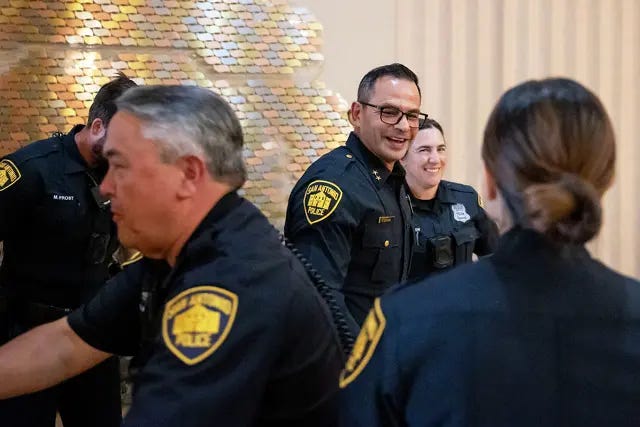
Jesse Salame Jr. didn’t set out to become a police officer. The San Antonio native originally wanted to join the Marines, but an injury changed those plans and eventually led him to criminal justice and the San Antonio Police Department in 1999. Over the next 26 years, Salame worked patrol, became a homicide detective—including investigating the high-profile Baby Gabriel disappearance—then moved into the department’s Public Information Office, a job he initially wasn’t looking for but that gave him a different view of policing and public trust. He continued rising through the ranks, working in Public Integrity and eventually becoming deputy chief, Chief William McManus’ chief of staff and assistant chief overseeing investigative and support functions. Now serving as acting chief, Salame is a leading candidate to permanently succeed McManus. The San Antonio Express-News portrays the journey as one Salame never really mapped out himself, but looking back, he says, “I think I was meant to be here.” 🔗 More here
Relationships Before 911
Michigan State Police is putting relationship-building at the center of a specialized community policing effort. The Pioneer reports MSP’s 18 community service troopers work full time in schools, at community events and with residents on prevention, education and outreach, while remaining fully sworn troopers ready to respond when traditional police work calls. Since restructuring the program in 2024, the unit has expanded its reach statewide, logging 1,668 visits or events and interactions with roughly 307,000 people through the first two weeks of August. MSP Director Col. James Grady said the goal is to reach young people before they enter the criminal justice system and build familiarity and trust with police early. Sgt. Don Stewart put the philosophy more simply: “We got out of the relationship-building business.” His solution is getting back to the fundamentals—handshakes, conversations and everyday interactions that build trust before a crisis brings police and the community together. 🤝 More here
Watch Out For That Tree
New podcast dropping this week. I won’t spill the beans on which law enforcement leader is joining me, but here’s a clue: His career in public safety started a long time ago, in a galaxy far, far away..
Find all prior podcasts, here.