

Attack Cops, Face Consequences
FBI Director Kash Patel issued a blunt warning to anyone who attacks law enforcement, vowing that those who “touch a cop” will be tracked down and arrested, according to Fox News. Speaking on a radio program Saturday, Patel emphasized that the FBI will back law enforcement partners and that anyone who assaults or interferes with officers in the lawful execution of their duties will “face the full force of law enforcement.” The comments come as the Department of Homeland Security reports that violence against federal agents has spiked to a record high since the start of the Trump administration’s immigration enforcement crackdown. 🔗 More here
Local-Federal Common Ground
Federal, state, and local law enforcement leaders — along with prosecutors and labor organizations — convened to find practical agreement on intergovernmental immigration enforcement cooperation, according to the International Association of Chiefs of Police. Four core principles emerged: consistent two-way communication and early notification before federal operations begin; coordinated tactics to protect both officer and community safety; focusing enforcement on violent criminals and national security threats rather than broad population sweeps; and reducing politically charged rhetoric from all sides that undermines trust and collaboration. Participants agreed that community trust is an operational requirement that directly impacts crime reporting, officer safety, and law enforcement effectiveness at every level. 📝 Core Principles
Who’s Levying Complaints
Minneapolis Police Chief Brian O’Hara now has 30 complaints filed against him, which is 15 times the number the last chief of police had on file. O’Hara says he thinks most of the recent heat he faces is related to the ICE surge in Minnesota.
Chief to Retire After Shooting
The Howard County, Maryland police chief announced his retirement amid scrutiny following the fatal shooting of a 25-year-old autistic man, according to WMAR-2 News. Alex LaMorie died on March 1 after calling 911 on himself for a wellness check and approaching officers with a knife; body camera footage shows an officer pleading with him before three officers opened fire. Chief Gregory Der had already notified County Executive Calvin Ball of his planned June 1 retirement before the public outcry began. In response to the incident, the county purchased 200 tasers — which were not standard issue at the time of the shooting — and the state Attorney General’s office is investigating whether criminal charges are warranted. 🔗 More here
Camera Doesn’t Lie
Two contrasting local cases illustrate the value of body cameras, according to CNHI. In Hampstead, New Hampshire, body camera footage corroborated officers’ accounts in a 2024 shooting and validated their use of force. In North Andover, Massachusetts, the absence of cameras in a shooting involving two officers resulted in a “he said, she said” trial that ended in acquittal — with the judge noting prosecutors may have met their burden of proof had cameras been present. Chiefs who have adopted the technology report that cameras reduce complaints against officers, routinely exonerate them from false accusations, and build community trust. As one chief put it simply: “The camera doesn’t lie.” 📸 More here
Chief Addresses Court Fears
Nashville Police Chief John Drake fielded community concerns about whether Hispanic families can safely access Davidson County courthouses following reports of ICE arrests at courthouses in neighboring counties.
Disabling License Plate Readers
Law enforcement agencies across Washington state, including Seattle and Kent, have temporarily disabled mobile automated license plate readers to comply with a new state law that took effect March 30, according to KUOW. The law sets a 21-day data retention limit and prohibits capturing plate data near sensitive locations including immigration offices, schools, courts, places of worship, and food banks. Agencies are working with vendors Axon and Flock to develop geofencing solutions, but in the meantime officers have reverted to manually running plates — the same results, significantly slower. While chiefs acknowledge the new privacy protections have merit, particularly for domestic violence victims, some warn the 21-day retention limit could jeopardize property crime investigations where detectives may not identify a suspect vehicle until weeks after the incident. 🔗 More here
Mile High ALPR Swap
Denver moved from Flock to Axon for license plate recognition cameras after concerns that Flock had been sharing Denver data with other cities and immigration enforcement agencies, according to Denver7. Under the new $150,000 Axon contract, data is stored for 21 days, access is restricted exclusively to Denver police investigating active criminal cases, and no other law enforcement agency — including federal — can access the system. Axon does not maintain a national network, does not sell customer data, and confirmed its cameras capture vehicle and plate information only — not facial recognition or occupant images. 🔗 More here
More Than Just Enforcing Laws
For more than 25 years, the U.S. Holocaust Memorial Museum and the Anti-Defamation League have led police officers and recruits through a day-long training called Law Enforcement and Society, which uses photographs of German police during the Holocaust to prompt discussions about the role of law enforcement in a democratic society, according to the Police Executive Research Forum. The program was created by former Washington D.C. Police Chief Charles Ramsey after a museum visit led him to realize that German police — who took oaths similar to his own — played an active role in the Holocaust. “Through history we learn,” Ramsey told PERF. “We can learn from the Holocaust and help police understand that their role is about more than just enforcing laws.” The training is now part of recruit programs for agencies including the U.S. Capitol Police, Metropolitan Police Department, and Tampa Police Department, which has put every new officer through the curriculum since 2013. ✡️ PERF Report
Dropping This Week
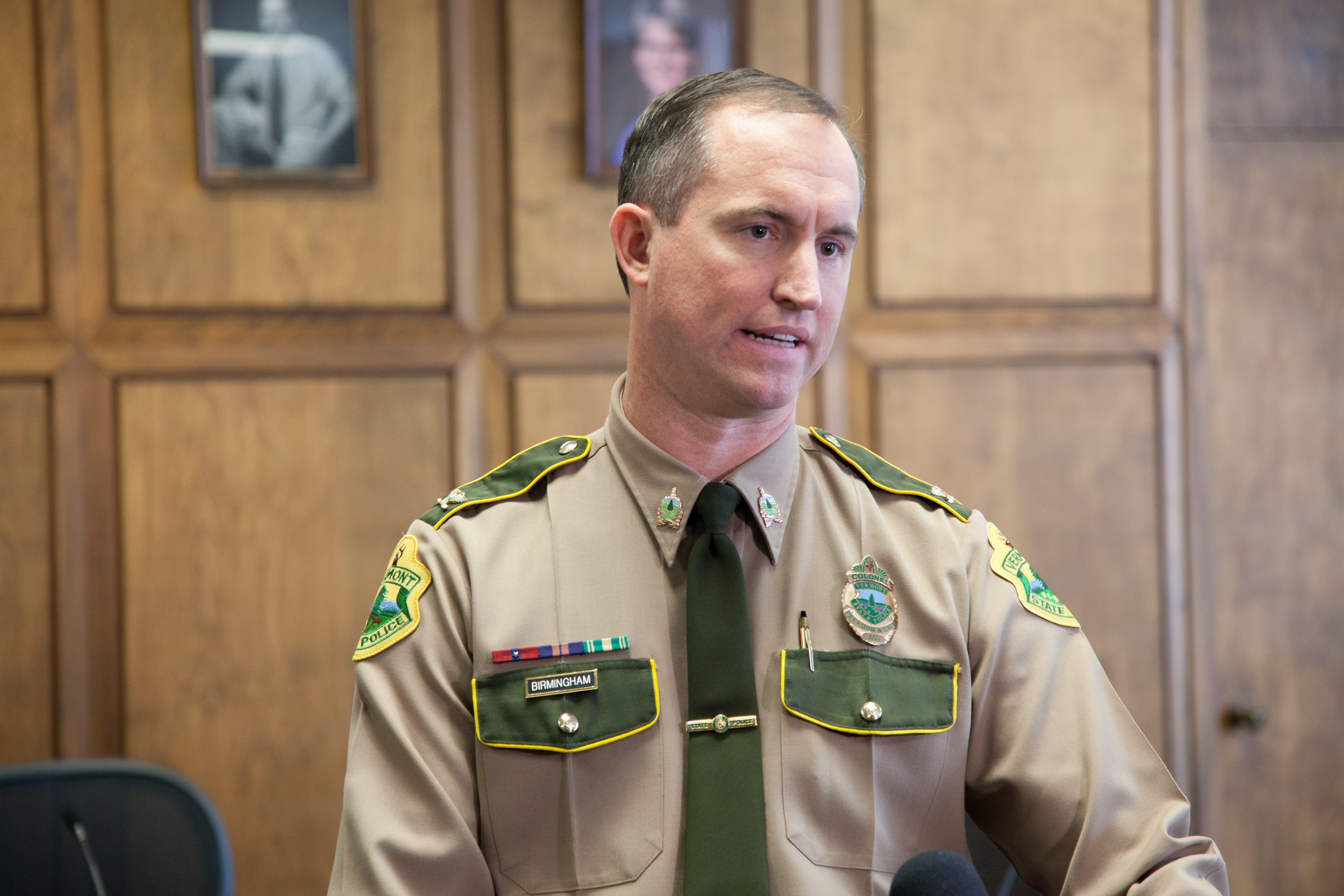
This week's guest is Colonel Matthew Birmingham of the Vermont State Police — responsible for policing 200 of the state's 250 cities. Colonel Birmingham talks leadership, northern border enforcement, rural law enforcement, and officer mental health in a conversation you won't want to miss.
Oakland Launches Gun Blitz
Oakland police announced a 60-day enforcement operation in partnership with the ATF, FBI, and DEA targeting illegal gun sales and firearm-related crimes, according to KTVU Fox 2. The operation will include undercover operations, directed patrols, search warrants, and intelligence-led investigations, with Assistant Chief Casey Johnson warning that those found with illegal firearms could face federal charges. The announcement comes as city leaders report a 29% drop in violent crime in the first quarter of 2026 compared to the same period last year, including double-digit declines in homicides, robberies, and aggravated assaults. 🔗 More here
Mass Officer Charges
More than a dozen Massachusetts police officers have been charged with felonies in the first three months of 2026, nearly double the pace of recent years, according to MassLive. State oversight data show 20 current and former officers had their certifications suspended in the first quarter. Cases include four state police members facing manslaughter charges in the death of a recruit, a separate alleged DUI cover-up within the state police, and a Plymouth officer accused of sexually abusing her adopted son. Experts disagree on the cause — some point to weak leadership and inadequate hiring standards, while others say the prosecutions reflect an unwillingness among officers to cover for colleagues. A retired State Police major said: “The system is in failure mode.” 🔗 More here
Bomb Proofing Horses
The Atlanta Police Department is training its mounted patrol unit for crowd control and security during the 2026 FIFA World Cup, which will bring eight matches to the city including a semifinal, according to FOX 5 Atlanta. Officers are “bomb-proofing” horses — desensitizing them to loud noises, large crowds, flags, and fireworks — while also practicing crowd control techniques with partner agencies. Atlanta expects roughly two dozen horses on hand, with additional riders coming from the Cobb County Sheriff’s Office, Savannah, and Memphis. Officers say the elevated vantage point on horseback is a significant tactical advantage in congested areas, and that the unit will also serve as community ambassadors to help fans navigate the city. 🐴 More here
Troopers Rescue Cub
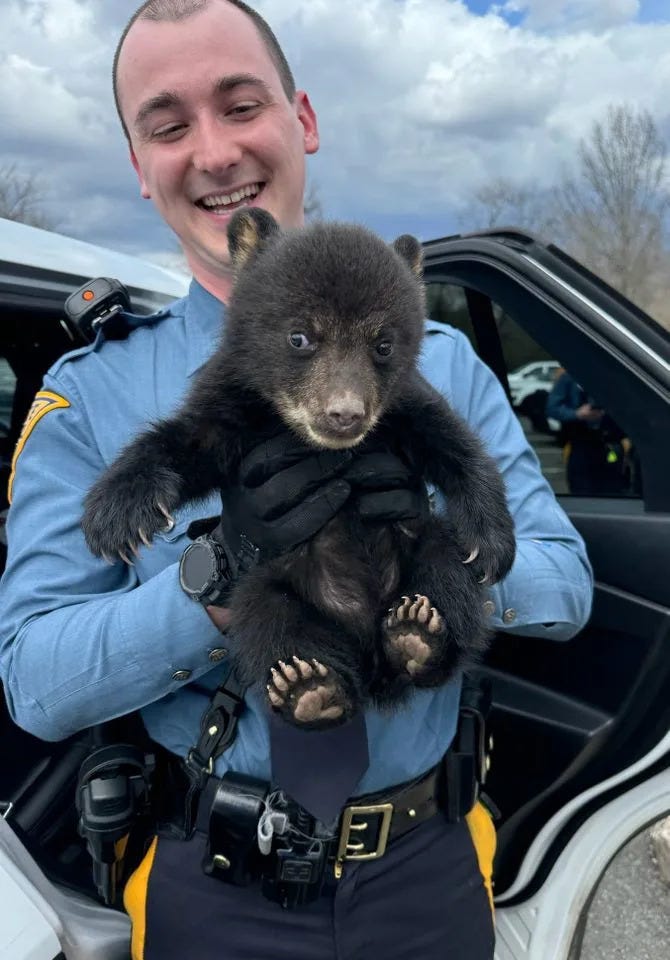
New Jersey State Police troopers responded to an unusual call April 1 after a lone bear cub was spotted in a roadside ditch along I-78 in Union Township, according to NBC10 Philadelphia. Troopers safely secured the cub, transported it to the barracks, and released it to the state Department of Environmental Protection for proper care. A photo of a trooper cradling the tiny cub quickly won over social media, with police calling it a “paw-sitive” outcome. 🐻 More here
Students Build AI Tools
Three high school students in Columbia, Missouri won the state AI championship for developing artificial intelligence tools designed to assist local police, according to KOMU 8. The trio built a 911 call analyzer to identify crime trends, a video analysis tool, and a police reporting assistant — all developed from scratch in partnership with the Columbia and University of Missouri police departments. The students emphasized that their AI is designed to assist officers, not replace human judgment, with one noting the technology is “never making the last decision.” The tools are not yet in use by the department due to cybersecurity concerns around sensitive law enforcement data, but the students are now advancing to regional competition 💻 More here
Live Facial Recognition
North Yorkshire Police in the UK has announced plans to begin using live facial recognition cameras in intelligence-led locations to identify high-risk offenders and protect vulnerable people, according to the BBC. The technology scans faces in real time, comparing them against a watchlist of persons of interest, with non-matching images deleted immediately and the watchlist itself deleted at the end of each deployment. Several other UK forces are already using the technology. 🔗 More here