

The Phoenix Boys
American teenagers are becoming part of the pipeline supplying firearms to Mexican cartels. The New York Times followed four current or former Phoenix high school students, ages 16 to 19, who described buying, stealing and reselling firearms to U.S.-based cartel operatives, with many of the weapons ultimately headed to Mexico. One 18-year-old says he coordinates dozens of students from at least 20 Phoenix high schools, while federal officials say cartels increasingly recruit young people because they can be lured by quick money and often have clean records. Encrypted messaging apps have made the underground market easier to access, allowing teenagers to find guns, buyers and suppliers with remarkable speed. Federal data show about one-third of identified gun traffickers investigated by ATF from 2017 through 2021 were under 25, including about 5% who were under 17. 🔗 More here
Fewer Officers Killed
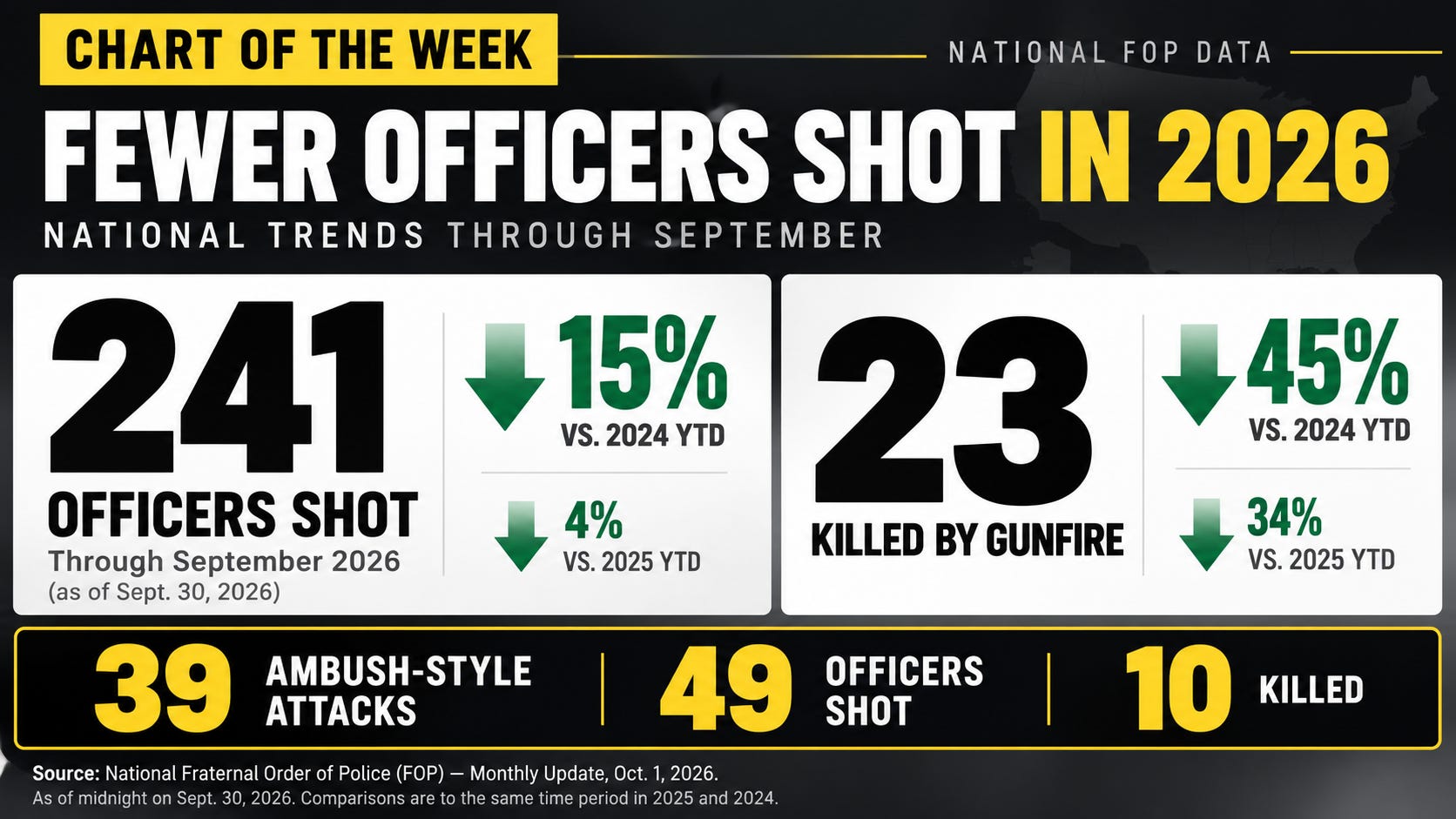
Through September, 241 law enforcement officers have been shot in the line of duty, down 4% from the same period in 2025 and 15% from 2024, according to the National Fraternal Order of Police. Twenty-three officers were killed by gunfire—down 34% from 2025 and 45% from 2024—while 49 officers were shot in 39 separate ambush-style attacks. 📉 National FOP report
500,000 Faces. Zero Arrests.
A six-month British Transport Police trial of live facial recognition scanned more than 500,000 faces at London railway stations without producing a single arrest attributable to the technology. According to The Standard, BTP spent £320,786 and nearly 100 hours of officer time across 18 deployments between February and July. The system generated one watchlist alert, which turned out to be a false match. BTP has since extended the trial to London Underground stations, where three subsequent confirmed alerts identified people who were complying with their court-ordered conditions. 👀 More here
Birmingham’s Crime Drop
Birmingham has recorded 34 homicides through the third quarter of 2026, compared with 61 at the same point last year and 129 in 2024—a 74% decline from 2024. WBRC reports violent crime is down 8.6%, Part One crime is down 13%, police response times have improved 16.4%, and the department reports a 91% homicide clearance rate; domestic violence remains a concern, with cases up 18.3%. 📊More here
The Crime Drop Exception
Violent crime is falling across much of the country, but intimate partner violence is not declining at the same pace, like in Birmingham. The Police Executive Research Forum reports that most police executives it surveyed said IPV-related homicides and assaults were not falling as quickly as overall violent crime, with some jurisdictions reporting increases. More than three-quarters of responding agencies use a lethality or risk-assessment tool, and PERF points to strangulation as a particularly serious warning sign: research shows a woman strangled by a male partner is more than seven times as likely to later be killed by that partner. PERF brought together more than 100 police executives, detectives, prosecutors, victim advocates and researchers to examine strategies including mandatory intervention, lethality assessments, strangulation protocols, firearm relinquishment and improved tracking of domestic violence. 📉 PERF Report
Funding for Local Police
State and local law enforcement agencies are receiving substantial new federal resources for participating in immigration enforcement. The Wall Street Journal reports that more than 1,800 agencies have joined the DHS task force program since 2025, with funding available for participating officers, equipment, technology, vehicles and overtime. DHS has distributed more than $200 million to law enforcement partners since January 2025, with Congress providing $1 billion for the partnership programs. The scale can be significant: the Miami-Dade Sheriff’s Office enrolled more than 970 deputies and was eligible for roughly $14.6 million in DHS funding from April through June. 🔗 More here
A Dog Leads the Way
Sometimes the best backup has four legs. A loose dog in Leawood, Kansas, led a police officer back home, where its owner had fallen and been unable to get up for more than three hours—turning an ordinary patrol encounter into a pretty remarkable rescue. 👮♂️ 🐕
Drones Change the Response
Salt Lake City Police are using drones and a developing Real-Time Crime Center to change how they respond to calls for service. According to The Salt Lake Tribune, during 391 drone flights over a three-week period in August, drones arrived first 70% of the time. In 88 cases, the remote pilot determined a patrol officer was not needed, while in 24 flights a drone helped locate or monitor suspects who were later arrested. The department says drones can launch in about five seconds from five docking locations around the city, giving officers real-time information before they arrive and allowing the department to handle some calls without sending an officer. 🔗 More here
Seattle Gets Proactive
Seattle Police Interim Chief Andre Sayles is developing a pilot program to put greater focus on proactive enforcement against people driving gun violence. According to KUOW, Sayles wants to devote more staffing to units that investigate gun crimes, identify suspects, serve warrants and make arrests. Seattle Police Officers Guild President Kent Loux supports the effort, while the department says details about how many officers will be assigned are still being developed. Sayles told the City Council he wants police to be “very proactive” toward individuals responsible for a disproportionate amount of violence while balancing those resources against patrol staffing. 🚓 More here
AI Watches. Does It Matter?
Can AI analysis of body-camera footage change officer behavior? A new randomized controlled trial involving 314 Arizona Department of Public Safety troopers tested an AI-based body-camera analytics platform and found no statistically significant effects on stops, citations, arrests, use of force or complaints after correcting for multiple comparisons. Researchers also found no evidence that the technology caused officers to become less active. Published in Crime Science, the study concludes that the platform produced neither the hypothesized “civilizing effect” nor a “de-policing effect” on trooper behavior. 🔗 Study here
Crime Is Falling Down Under
U.S. police leaders aren’t the only ones seeing crime move in the right direction. New data from Victoria, Australia, show the state’s crime rate fell 3.8% in the year ending June 2026 after a period of significant increases. ABC News reports serious and violent crime fell 4%, including a 27% decline in home invasions, 25% decline in carjackings, 22% decline in robberies and nearly 20% decline in burglaries. Youth offending fell 8.1%, car theft declined 5% and theft from vehicles dropped 10%. Victoria Police also made a record 16,500 family-violence arrests. The numbers come despite significant staffing pressure: Victoria Police still has 1,340 unfilled positions. Police cautioned that overall crime remains 13% higher than three years ago, but said the latest declines are encouraging. 🇦🇺 More here
Wyoming Names New Colonel
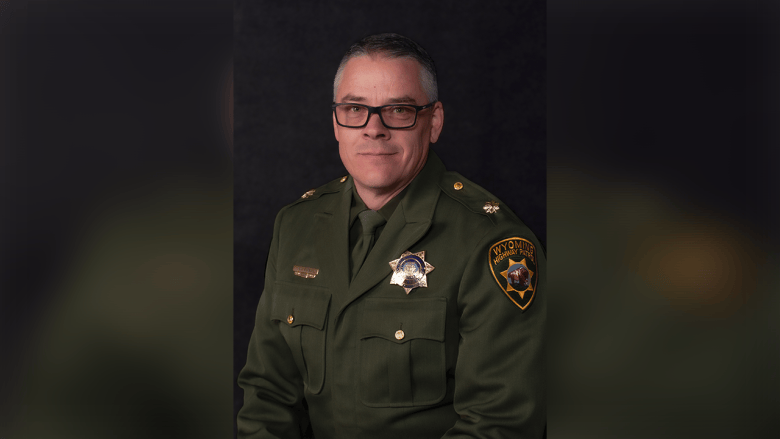
The Wyoming Department of Transportation has selected 25-year Highway Patrol veteran KC Ramsey to lead the Wyoming Highway Patrol following a five-month search. Colonel Ramsey, who most recently served as a major overseeing areas including communications, training, technology and special operations, says recruitment and retention will be among his priorities as he takes command. 🔗 More here