

Overdose Deaths Hit Turning Point
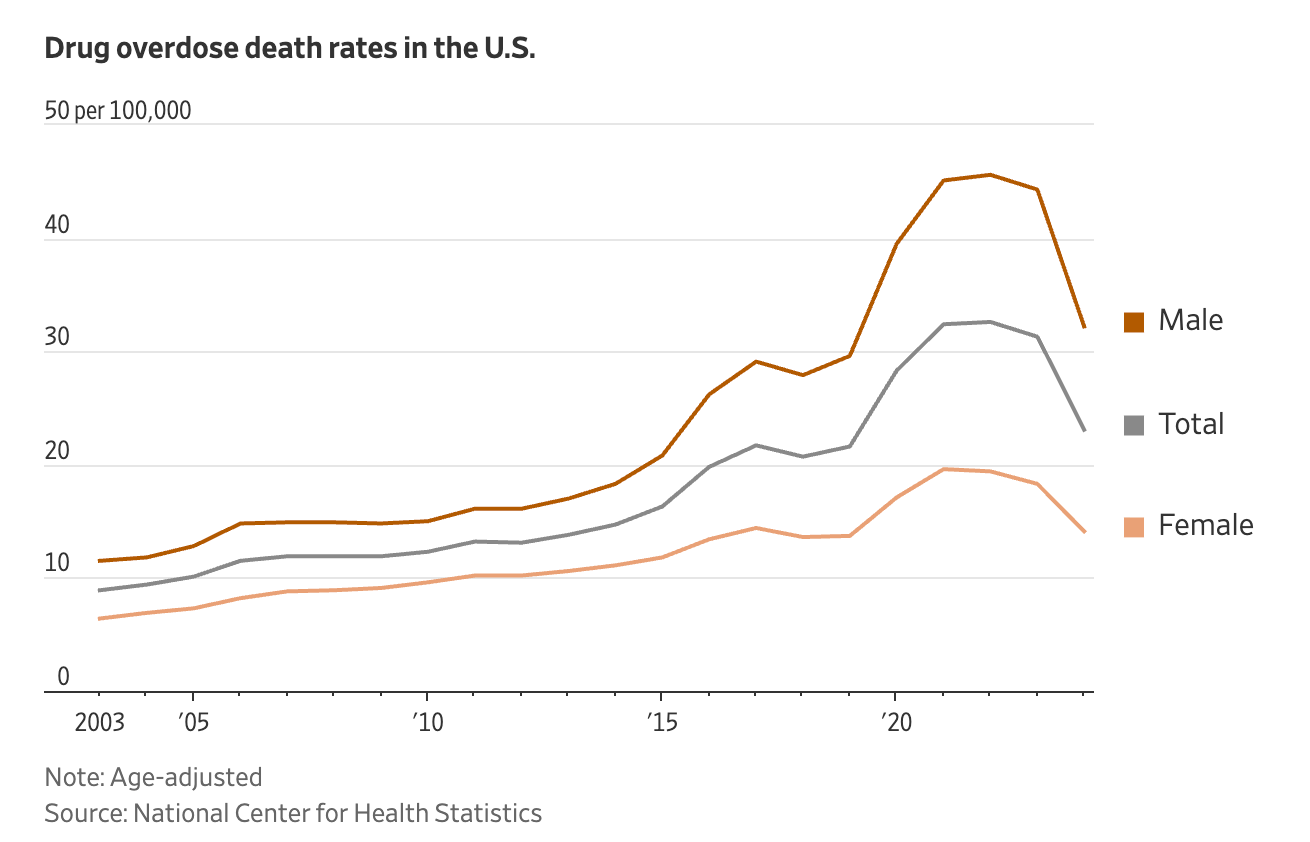
U.S. life expectancy reached an all-time high of 79 years in 2024, driven by a historic 26% drop in drug overdose deaths and a steady recovery from the pandemic. According to The Wall Street Journal, this rebound marks the first time American longevity has surpassed its pre-pandemic peak, with the most significant improvements seen among young adults aged 15–24, who experienced a 37% decline in overdose fatalities. While heart disease and cancer remain the top leading causes of death, COVID-19 has officially fallen out of the top 10, replaced by suicide as the 10th leading cause of mortality. Despite this milestone, health officials noted that the U.S. continues to lag behind peer nations due to stalled progress in cardiovascular health and persistent maternal mortality rates. 📊 More here
Doesn’t Make Sense
The Los Angeles Police Department will not enforce a new California law that bans federal law enforcement officers from wearing masks while on duty. According to KABC-TV, Police Chief Jim McDonnell criticized the “No Secret Police Act” as poor public policy, stating that having one armed agency confront another to create conflict “doesn’t make sense”. The ban was originally introduced following a series of Southern California immigration raids, but it is currently being challenged by the Trump Administration on the grounds of potential discrimination against federal agents. While McDonnell expressed frustration over how recent immigration enforcement has been handled, he emphasized that the LAPD remains aligned with federal partners on all other public safety matters. 🔗 More here
AI Propaganda Fuels Info Wars
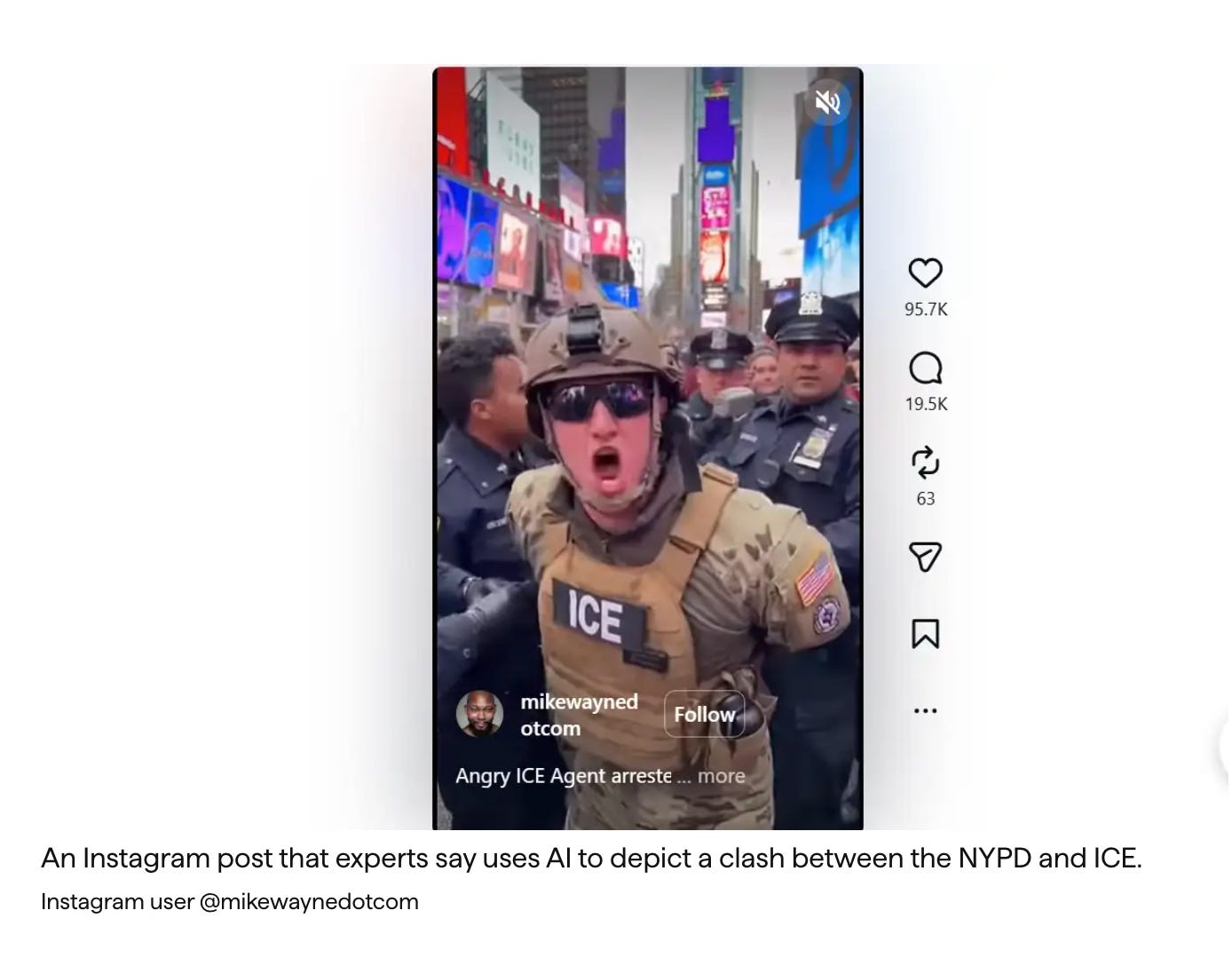
The proliferation of sophisticated AI-generated videos depicting fake clashes between local police and federal immigration agents is creating a “perfect storm” for political propaganda. According to Gothamist, several unlabelled videos have recently gone viral showing AI-generated NYPD officers arresting and berating purported ICE agents in locations like Times Square and the New York City subway. While the NYPD does not participate in civil immigration enforcement and no such arrests have occurred, experts warn that the sheer volume of this “synthetic media” threatens to undermine public trust in legitimate video evidence. As both sides of the political spectrum increasingly leverage these tools to inflame divisions, the trend highlights a growing national challenge: an information landscape where it is becoming easier for the public to discount real content while being manipulated by high-tech fabrications. 🤖 More here
Political Threats Reach High
Threats against members of Congress, their families, and staff surged to record levels in 2025, marking the third consecutive year of increases. According to POLITICO, the U.S. Capitol Police (USCP) investigated 14,938 “concerning” incidents last year—a nearly 58% spike from the 9,474 cases handled in 2024. Capitol Police Chief Michael Sullivan attributed the rise to a “false sense of anonymity” in online messaging and stressed that decreasing violent political rhetoric is the most effective way to reverse this trend. To manage the growing danger, the USCP has tripled its formal security partnerships with local agencies nationwide and expanded its 24/7 Protective Intelligence Operations Center to monitor lawmaker safety outside of Washington. 🔗 More here
BR Pod: Chief Doreen Jokerst
On the Core Mission of Policing
“The reason why policing exists is to protect the vulnerable from harm. We want people to run to us for help, and not run away.” — Chief Jokerst.
🎙️Listen to my entire interview with Chief Jokerst above.
UK Police Major AI Overhaul
The UK Home Office has announced a radical restructuring of British policing, shifting from a fragmented 43-force model to a unified “National Police Service” (NPS) designed to centralize data and accelerate the rollout of AI and surveillance tools. According to Computer Weekly, Home Secretary Shabana Mahmood intends to use this new service to coordinate a massive deployment of live facial-recognition (LFR) technology, increasing the number of dedicated mobile units from 10 to 50 nationwide while investing £115 million into the “Police.AI” hub to automate administrative burdens. While the government frames these reforms as an essential “standardization” to reclaim six million policing hours and keep pace with sophisticated digital crime, the plan has sparked intense debate over state overreach. The proposal has faced scrutiny from both civil liberties advocates and conservative lawmakers who argue that such a centralized "panopticon" model must be balanced by ironclad legal safeguards to prevent state overreach and protect fundamental British rights. 🇬🇧 More here
I receive a lot of great emails about the stories we cover (thank you 🙏) which has generated some great discussions. I’d love to move that discussion here, in the comments section. Please feel free to leave your thoughts to continue the conversation with our community of public safety leaders, technologists, and researchers.Aloha, Chief
The Hawaii County Police Commission has selected interim chief Reed Mahuna to permanently lead the department following a near-unanimous 9-1 vote. According to Hawaii News Now, Mahuna, a 28-year veteran of the force, has served as interim chief for five months and received overwhelming support from both the community and the police union. Mayor Kimo Alameda noted that Mahuna’s current experience leading the department and his strong relationships across city agencies set him apart from the other seven candidates. Upon his formal swearing-in, Mahuna stated his first priority will be establishing regular community engagement goals for his entire command staff to ensure the department is listening to and acting on the needs of local residents. 🌺 More here
New Indy-Metro Chief
The Indianapolis Metropolitan Police Department has appointed Tanya Terry as its new chief of police, making her the first woman to permanently lead the department in the city’s history. According to WFYI, Terry is a 27-year law enforcement veteran who previously served as IMPD’s deputy chief of operations and was a founding member of the city’s Violent Crimes Unit. Mayor Joe Hogsett highlighted that her leadership contributed to homicides reaching an eight-year low. 🔗 More here
Colonel Tracy Trott, RIP

Tracy George Trott, the retired Colonel of the Tennessee Highway Patrol (THP), passed away peacefully on January 25, 2026, marking the end of a legendary 40-year career in public safety. Trott’s law enforcement journey began in 1976 at the East Tennessee State University Police Department before he joined the THP in 1978. Throughout his four distinguished decades with the agency, he ascended through every rank to ultimately become Colonel, earning national acclaim for his rigorous professional standards and his innovative data-driven strategies to reduce highway fatalities. His leadership was defined by a deep devotion to the men and women of the THP and a relentless drive to improve officer safety.
(Editor’s Note: Colonel Trott was a good friend and mentor to many who read The Weekly Briefing, including me).
Shift in Police Mental Health
The growing emphasis on mental health within local law enforcement reflects a broader national trend of departments moving away from traditional "suck it up" cultures toward proactive wellness models. According to the Telegraph Herald, the unique psychological challenges of 21st-century policing—including the near-constant public scrutiny brought on by the expectation of immediate body camera footage—have led agencies to double down on professional support. While many departments now leverage federal grants for annual psychological check-ins to build resilience, smaller agencies in "sanctuary states" face significant hurdles as they are increasingly cut off from these federal resources due to political conflicts between state and federal administrations. 🔗 More here
Camera Success in Parks
A multi-year pilot program in Austin city parks has yielded a significant reduction in property crime, specifically targeting the surge of vehicle burglaries. According to KVUE, security camera trailers deployed at 15 high-traffic park locations resulted in a greater than 50% drop in vehicle break-ins across the monitored sites. Beyond property theft, officials noted a general decrease in vandalism, drug violations, and simple assaults. The program maintains strict privacy guardrails, explicitly prohibiting the use of facial recognition or audio capture while ensuring all footage is purged after 60 days unless required for an active investigation. 🎥 More here
The Fast, the Slow, and the Furry
Beyond The Briefing
If you’ve been listening to the Boldly Go Podcast, you know Rick Smith and I are focused on navigating the seismic shifts of “What’s Next.” We have officially launched the Boldly Go Substack as the podcast’s digital companion—a place to move our private deep dives into a public community. While this newsletter keeps you grounded in weekly public safety updates, Boldly Go is where we explore the frontiers of technology, leadership, and human potential. Join us for a behind-the-scenes look at the ideas we’re talking about, starting with this Wednesday’s episode featuring Scale AI CEO Jason Droege. Subscribe here.