

“No End in Sight”
In a deeply personal essay published in Police Chief Magazine, Dr. Serena Liebengood recounts the death of her husband, U.S. Capitol Police Officer Howard “Howie” Liebengood, who died by suicide on January 9, 2021 — three days after working through the events of January 6th with no sleep, no decompression, and no end to his shift schedule in sight. Howie was 51, a 15-year veteran, physically fit, happily married, and financially stable — every protective factor in place — yet none of it was enough to offset years of cumulative occupational strain compounded by a traumatic event with no relief. Research shows law enforcement officers are 54% more likely to die by suicide than the general working population, yet comprehensive wellness programs remain the exception rather than the norm. Dr. Liebengood argues that officer suicide is not an individual failure but a systemic one — rooted in staffing models, scheduling practices, organizational culture, and a health care system largely unaware of law enforcement’s elevated risk. 🔗 More here
Chief Earns Second Term
Columbus Mayor Andrew Ginther has appointed Police Chief Elaine Bryant to a second five-year term, citing significant crime reductions and strengthened community relations since she took over in 2021, according to Spectrum News. Bryant, the first Black woman and first outside appointment to lead the Columbus Division of Police, inherited a department that had recorded 73 homicides through May 2021 — a number that stands at just 21 at the same point in 2026, the lowest year-to-date total in at least 26 years. During her tenure she launched the Crime Gun Intelligence Center, a Non-Fatal Shooting Team that achieved a 92% case closure rate in its pilot area, and Beyond Enforcement — the first juvenile intervention program of its kind approved by the Ohio Department of Rehabilitation and Correction. 🔗 More here
Sacramento Swears In Chief
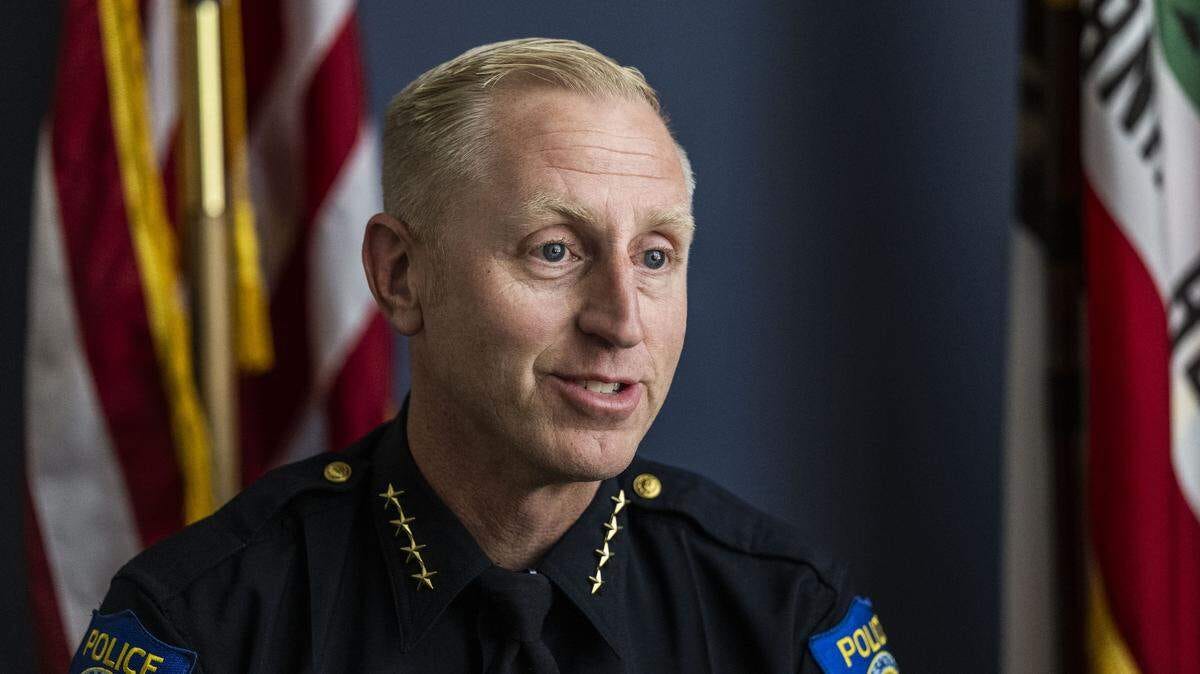
Sacramento has sworn in Deputy Chief Zachary Bales as its interim police chief, succeeding retiring Chief Kathy Lester — the first woman to lead the department — who is stepping down after more than three decades in law enforcement, according to the Sacramento Bee. Bales, a 24-year department veteran and former Army captain who joined SPD after September 11, has worked as a patrol officer, homicide detective, internal affairs investigator, and deputy chief of investigations. He inherits a department operating 11% below full staffing — 650 sworn officers against 733 authorized positions — amid a $66 million city budget deficit that has prompted discussions about cutting vacant positions. The department paid more than $15 million in overtime last year. Bales said his focus is continuity: "We're going to continue to combat violent crime. We're going to continue to innovate and push our technology initiatives forward." He has not ruled out applying for the permanent chief position when the city launches its search. 🔗 More here
Milliseconds
A Michigan police chief is releasing body camera footage of a near-deadly encounter to warn students about the dangers of a popular senior prank game, according to CBS Detroit. A Davison Township officer responding to a suspicious activity call approached what he believed was an active burglary, only to have a high school senior jump out and spray him with a squirt gun. Chief Jay Rendon said the officer had “milliseconds” to decide not to fire. “That kid’s family should be planning a funeral right now,” Rendon said. “That’s how close this was.” Rendon is urging students who continue playing to notify police in advance, gather in public spaces like parks, and use only large, brightly colored water guns — warning that dark-colored guns, even with an orange tip, can be indistinguishable from real firearms in a split-second encounter. 🔫 More here
Indy Enforces Summer Curfew
Indianapolis Police Chief Tanya Terry is getting ahead of summer by partnering with area schools to share a video message and letter outlining this year’s extended juvenile curfew, which takes effect for 120 days through around Labor Day, according to WTHR. Now in its second year, the temporary curfew requires children ages 15-16 to be home by 9 p.m. Sunday through Thursday and 11 p.m. on weekends, while those under 15 must be off public streets by 9 p.m. any night of the week. Teens found in violation may be held until a parent or guardian is contacted. Terry said the curfew is paired with community programs, sports, and mentorship opportunities to give young people structured alternatives during the summer months. 🔗 More here
LPRs Split a City
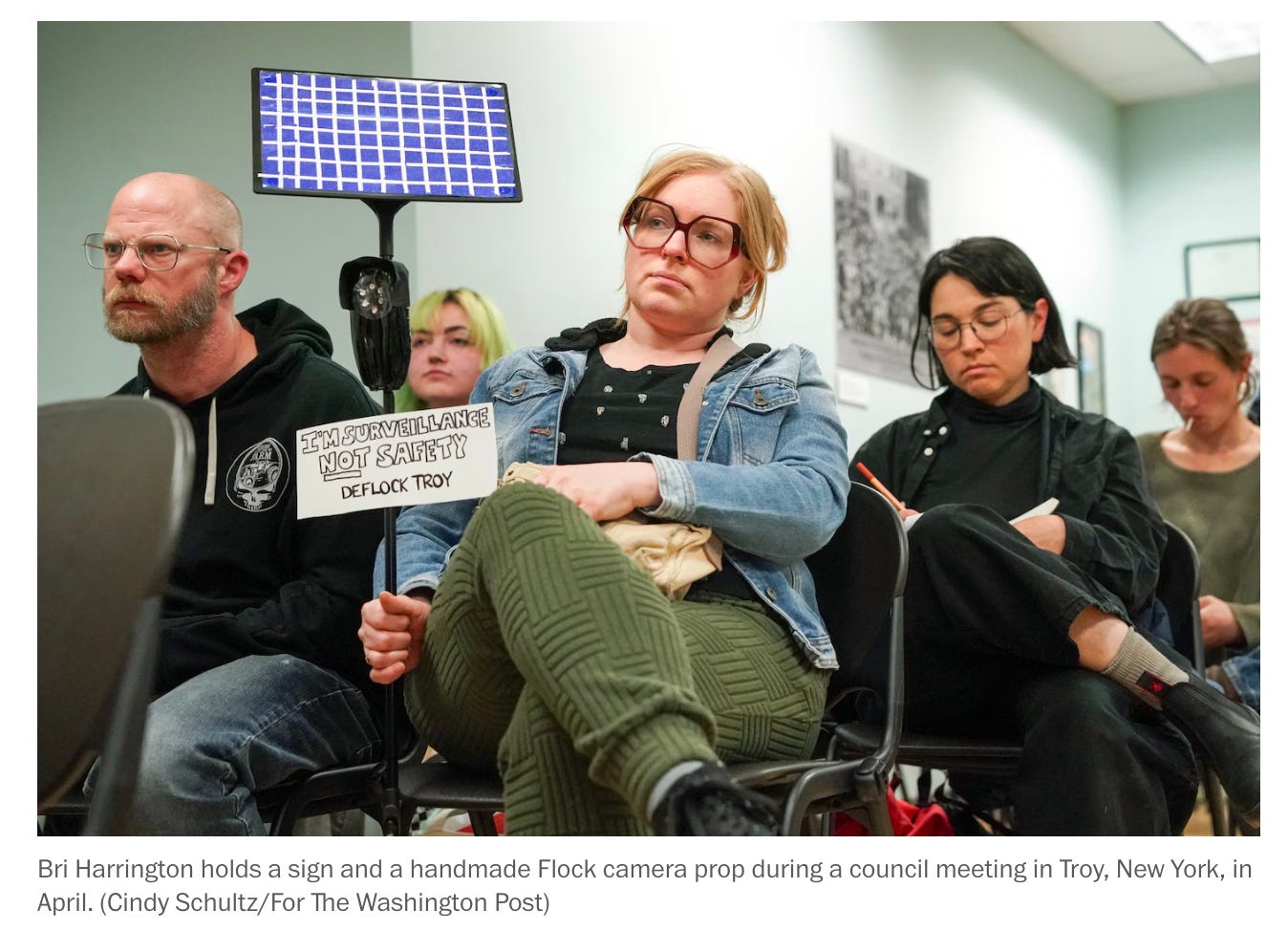
A dispute over AI-powered license plate readers has plunged Troy, New York into a constitutional standoff, with the Republican mayor declaring a state of emergency to keep 26 Flock Safety cameras running after the Democratic city council moved to halt funding, according to the Washington Post. The cameras — which snap photos of every passing vehicle and create digital records including bumper stickers and other identifying details — were installed by the police department beginning in 2021 without council approval or public input, despite city policy requiring council sign-off on contracts over $35,000. Police say the cameras have aided in solving major crimes including two homicides, while critics argue they enable unchecked surveillance and raise concerns about data security and potential use by federal immigration authorities. The dispute mirrors a growing national debate — an estimated 90,000 Flock cameras are now in use across the country, and more than 60 communities have canceled or rejected contracts with the company. 🔗 More here
Second Great Crime Decline
The United States may be living through a second “Great Crime Decline” — one that rivals the historic drop in violence seen in the 1990s — with murder rates potentially at the lowest levels ever recorded by the FBI, according to The Trace. Through April, New York City recorded its fewest homicides ever in data going back to 1960, with Philadelphia, Baltimore, Chicago, and New Orleans posting similarly historic lows in 2026. Crime analyst Jeff Asher estimates the country saw 6,000 to 8,000 fewer murder victims in 2025 than in each of the peak COVID years, marking the third consecutive year of historically large declines. The cause remains unclear — the drop has occurred across all types of cities, during a period of reduced police staffing and no major policy breakthrough — leading Asher to caution that without understanding what is driving the decline, there is no guarantee it continues. 📉 More here
Police Do Matter
Recorded live in front of 3,000 attendees at Axon Week in Nashville, Mike and Rick Smith sit down with Harvard cognitive psychologist Dr. Steven Pinker — author of The Better Angels of Our Nature — for a conversation that makes the case policing rarely gets to hear made at this level: violence has been declining for centuries, and law enforcement has played a central role in making it happen. Pinker traces the arc from medieval Europe, where disputes were settled by force, to the modern state’s monopoly on legitimate violence — and explains why homicide rates in major U.S. cities just hit historic lows, even as academia resists giving police the credit. He also unpacks “common knowledge” — the moment everyone knows that everyone else knows — and how body cameras and bystander video have fundamentally transformed policing by turning private moments into public accountability. 🎙️Apple Podcasts 🎙️ Spotify
Drugged Driving Data Gap
Federal efforts to track drug-impaired driving deaths have stalled amid staffing cuts and funding delays, leaving law enforcement without reliable national data on a growing public safety threat, according to the Washington Post. Unlike alcohol, drugs are not systematically tracked in fatal crash data — despite evidence that they play a significant role. In Mesa County, Colorado, nearly half of all traffic fatalities over an eight-year period involved a driver impaired by alcohol, drugs, or both. NHTSA’s impaired driving division has dropped from five employees to just two following federal workforce cuts, and over $475 million in crash data modernization funding expired largely unused. As more than 40 states legalize or decriminalize cannabis and other substances, researchers warn the data gap directly limits enforcement strategy: “If you want to solve a problem, you need to understand the problem.” 🔗 More here